Supernatural Stuff

Why is fantasy so cool? Because there is something within all of us that longs for the supernatural. I’ve SERIOUSLY paraphrased something C. S. Lewis writes about this in The Weight of Glory:
“For a few minutes, just as the moment of vision dies away, as the music ends or as the landscape loses the celestial light, we have had the illusion of belonging to that world. The promise of glory means that the door on which we have been knocking all our lives–the door to the supernatural–will open at last.”
In Daniel and the Sun Sword, Daniel finds that even when he’s running away from that door, much less knocking, it’s going to open.
(more…)
Updates, Y’all…

Hello followers!
I’m excited to share some updates for Daniel and the Sun Sword.
1) It’s official. D&SS is scheduled to be released in July 2015, which is only 8 months away!
2) Within the near future, it will be available for PRE-ORDER. I’m totally stoked!
3) Also, the cover development will begin in January.



Do Legends Contain Truth?

Last year I wrote a post explaining that Christian Fantasy (Speculative Fiction) begins by presuming the basics of a Christian worldview and then asking “What if?“. One of the central What if’s of Daniel and the Sun Sword (D&SS), and the Sons and Daughters series as a whole, has to do with the origins of worldwide mythologies: What if every culture’s myths grew out of man’s fallen memory of the one true God and his plan for redemption? No doubt many believe as much, but the fun starts when you try to untangle how those legends developed. (more…)
Join Me On the Literary Fellowship This Saturday at 10:00 A.M.

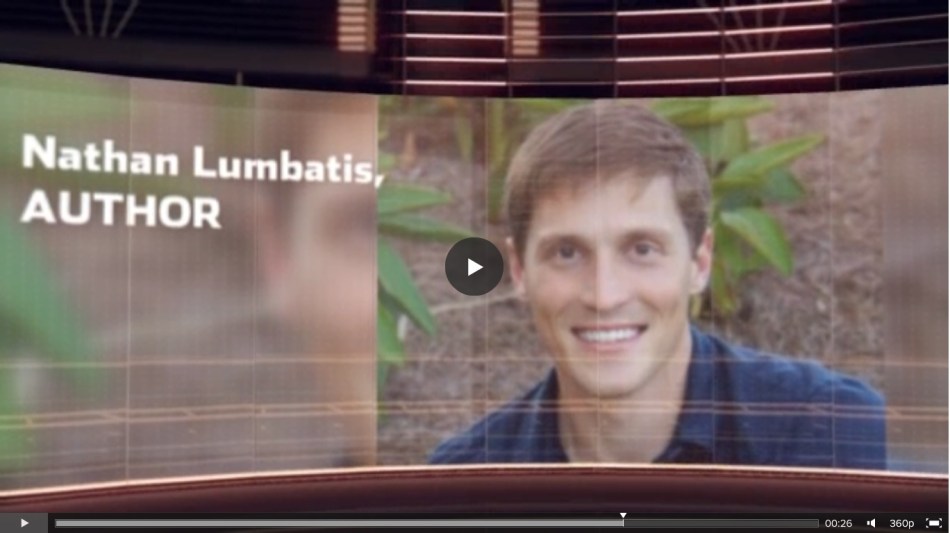
Join me this Saturday (September 20th) at 10:00 A.M. CST on The Literary Fellowship, a place where Christian authors gather to share their passion for writing. We meet the third Saturday of each month on Google Hangouts on Air. I, my publisher, and two other Ellechor authors will be guests and will be discussing what it means to be an authorpreneur.
What’s an authorpreneur you ask? Come on over on Saturday and you’ll find out.
Hope to see you all there!
Click on the box below to be taken the promo video.
Writing Contest College Winner: The Truth Will Set You Free, by Emily Butler

“The Truth Will Set You Free”
William Blake once wrote, “When I tell the truth, it is not for the sake of convincing those who do not know it, but for the sake of defending those that do.” In Flannery’ O’Connor’s “A Good Man is Hard to Find,” O’Connor strives to communicate truth to her readers in a much more directed and intentional way. Her truth-telling comes from an intention to convince, or inform, the ignorant. O’Connor’s religious beliefs led her to do so; she spread the truth to others just as Jesus did—through parables. Stories touch the heart, while overt direction tends to offend. Nevertheless, Flannery O’Connor writes to convince the ignorant and apathetic using a robust and sometimes hard-to-swallow theme of hypocrisy throughout “A Good Man is Hard to Find.”
The very names of O’Connor’s characters demonstrate her theme of hypocrisy. O’Connor intentionally names two of the antagonists, June Star and John Wesley, symbolically. With further analysis, it becomes evident that “June Star” is a name symbolic of astrology and horoscopes, practices which are prevalent in pagan religions such as Hinduism, Wicca, Buddhism, and Shintoism. At the same time, the name “John Wesley” is symbolic of Christianity— the religion that O’Connor practices herself. The real life John Wesley was a revivalist and the founder of the Methodist church. In “A Good Man is Hard to Find,” the two children act horribly on a car ride to Florida After the car accident occurred, both June Star and John Wesley screamed, “We’ve had an ACCIDENT!” but were disappointed that no one was killed. To the reader, there is no difference in their behaviors (185; 189). Evidently, O’Connor wants her readers to analyze the symbolism she provides through these two characters. Her apparent intent in developing June Star and John Wesley as practically the same person is to cause offense by demonstrating their hypocrisy regardless of their religious affiliation. This consistency of awful behavior displays one of many clues into O’Connor’s theme of hypocrisy.
The character of Grandmother is similarly oblivious to her hypocritical behavior. She tells June Star to be ashamed of herself in public, yet does not say a single word to her in terms of discipline once the family returned to the car (186). Grandmother does this because she truly does not care about the actions of June Star; she only cares about how June Star’s rude behavior may reflect upon her as a “lady.” Grandmother also wears white gloves and elegant clothes in public so that she would be recognized as a lady (184). It could be said, therefore, that her attire provides the reader with a concrete symbol of hypocrisy: white for an outward display of purity and class juxtaposed against her manipulative and uppity behavior. Grandmother’s character proves to be the most effective example of hypocrisy—O’Connor writes her to be like a normal person a reader would see in 2014.
Not only do O’Connor’s name choices and character development confront the reader with the various guises of hypocrisy, but she also further emphasizes the shallow piety of her characters by juxtaposing them with the character The Misfit, who is the embodiment of the opposite evil: one who is perfectly aware of his own sins, but who is nonchalant and apathetic toward them. The Misfit very clearly states, “Nome, I ain’t a good man,” and continues to provide examples of why and how this is true (191). With this comparison, O’Connor is provoking internal conflict within her readers. As my English class discussed this story, the general consensus was that this character is a terrible person deserving no mercy. But I began to think, “Is it worse to do bad things, know it, and not hide it than to do bad things, know it, but act like you have it all together?” One could say that they are equally bad. After acknowledging this internal conflict within myself, it became clear that O’Connor is challenging her readers to question their own choices, and to examine their attitude toward their mistakes.
To put it simply, Flannery O’Connor’s “A Good Man Is Hard to Find” is a literary slap in the face. O’Connor’s underlying, yet overwhelming, theme of hypocrisy provides convincing, and somewhat forceful, truth to readers. From my perspective, O’Connor’s purpose for this parable is to provoke her audience to reflect upon their own lives and choices. She simply painted a literary picture of various common expressions of hypocrisy so that readers will become aware of the darkness around, and within, themselves. O’Connor’s ideal world would not necessarily be made of all faultless people, but comprised of people who are aware of their sins, and who deal with them appropriately.
Work Cited
O’Connor, Flannery. “A Good Man Is Hard to Find.” Literature and the Writing Process. Eds. Elizabeth McMahan, et. al. Boston: Longman, 2014. 183-93. Print.
 Nathan Lumbatis